Predicting Investment in Startups Using Network Analysis
With the rapid advancement of technology and innovation, countless deep-tech startups have emerged, making the startup ecosystem more vibrant than ever. However, at the same time, many of these startups fail to secure follow-on investment beyond the seed or early-stage round and disappear from the market. In such an environment, investors are tasked with making difficult decisions about which startups are most likely to grow and succeed—despite having limited information. The challenge lies in the fact that traditional indicators such as financial data or founder credentials are no longer sufficient for making these predictions.
This study introduces a machine learning-based approach that incorporates founders' network positions and collaboration structures to predict the likelihood of successful follow-on funding.[1] The research found that network structure metrics such as centrality and community membership within startup founder networks significantly influence investment outcomes.
Network structure metrics such as centrality and community within startup networks
significantly influence investment outcomes.
Background
The Challenge of Investing with Limited Information
Investment decisions in early-stage startups are often made with limited and uncertain information, and lack quantitative benchmarks. Most previous research on startup funding has focused on financial performance or founder attributes, overlooking the role of network interaction data within the startup ecosystem. In reality, startup founders are interconnected with support organizations, investors, mentors, and others, and this structural position may be closely tied to their chances of raising future funding.
Core Idea
Measuring Importance in the Startup Network
The study analyzed data from startups that received support through the TIPS (Tech Incubator Program for Startups) from 2013 to 2020. Startups were categorized based on follow-on investment size—those with Series A or higher as "high" and the rest as "low." Founders or investors are represented as nodes, and investment relationships are defined as links to construct the network. From this network, key features such as degree, closeness centrality, and community membership are extracted for each founder or investor. Finally, these network analysis results are combined with traditional business performance metrics to train a model that predicts the likelihood of securing follow-on investment.
Solution
Step 1. Building Networks
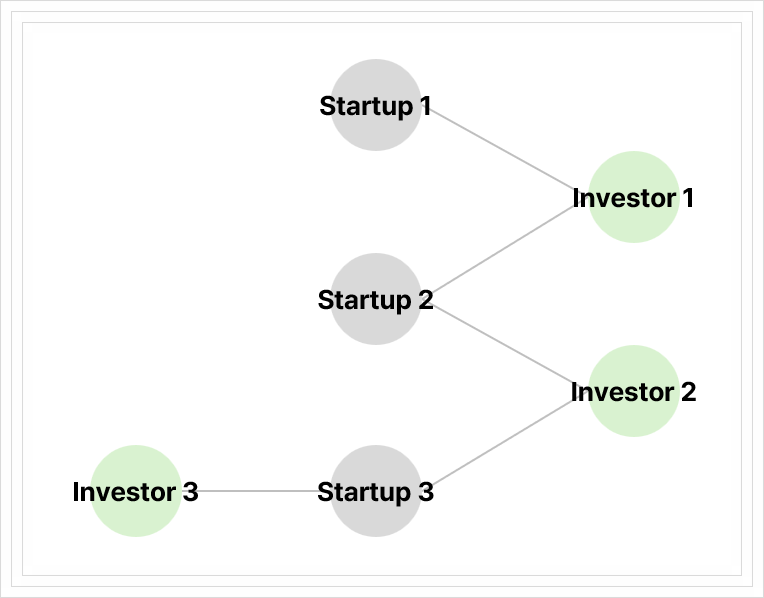
The first step was to structure the data into a 2-mode network connecting startups (founders) with investors.

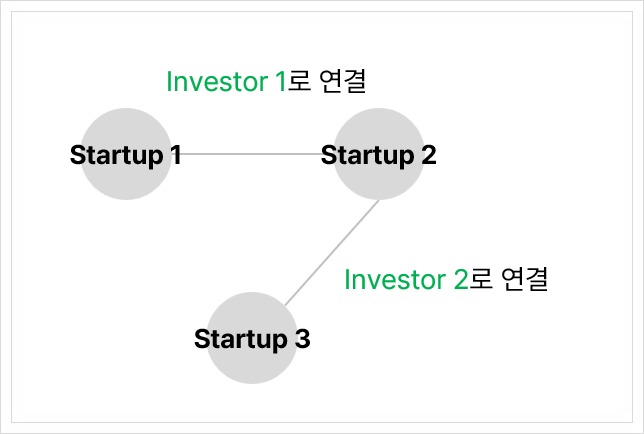
Next, based on shared investors, a 1-mode startup–startup network was created. In this model, startups that received funding from the same investor were assumed to be connected.

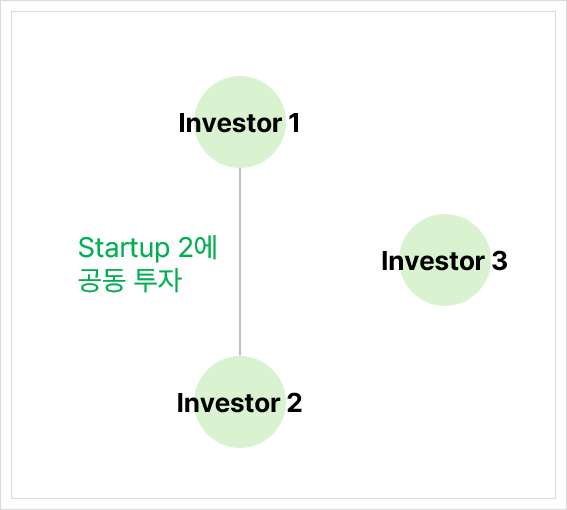
Also, an investor–investor network was also built to assess how connected and influential each investor was—since the prominence of the investor can also impact startup success.

Step 2. Network Analysis
Each startup and investor in the network was analyzed for centrality and community structure.
Key interpretations include:
High-centrality startups: Often share investors with many other companies, typically indicating they’ve received funding from major or active VCs.
High-centrality investors: Interact with multiple startups or investors, signaling high influence.
Startup communities: Clusters of startups that share investors, suggesting efficient and rapid exchange of resources and information.
Step 3. Follow-On Investment Prediction Model
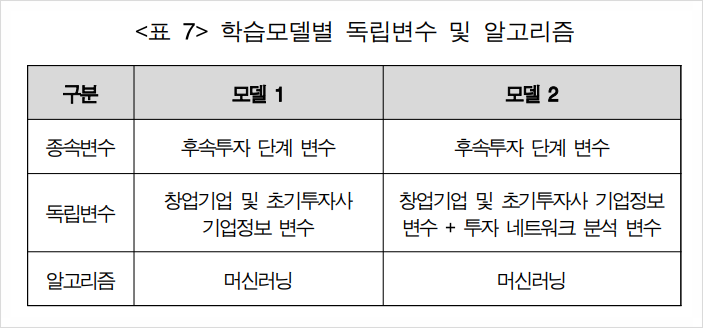
Using both startup attributes and graph-based features, the researchers trained machine learning models (e.g., XGBoost, Logistic Regression) to predict follow-on investment outcomes. To measure the impact of network features, two models were compared:
- Model 1: Based only on startup attributes (industry, education, revenue, etc.) - Model 2: Included graph features like centrality and community membership
<Example of Training Data>
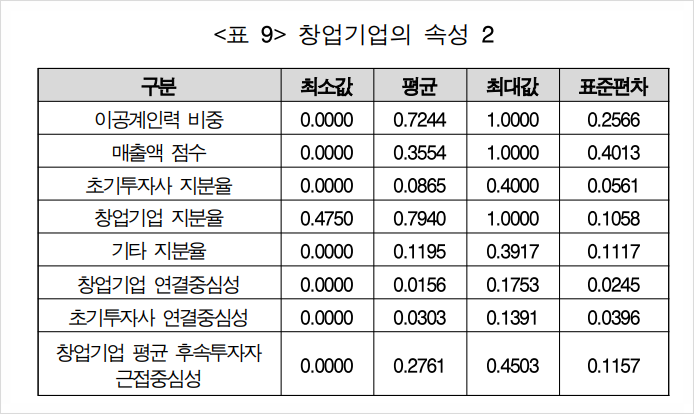

<Models>

Result
Using Network Intelligence to Enhance Investment Predictions
The machine learning model that incorporated graph/network-based features showed 5–15% higher accuracy in predicting follow-on investment compared to models using only traditional features.
<Model Accuracy>
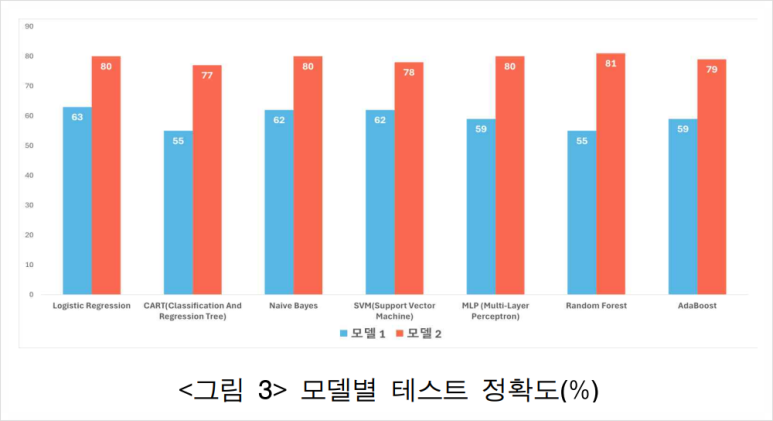

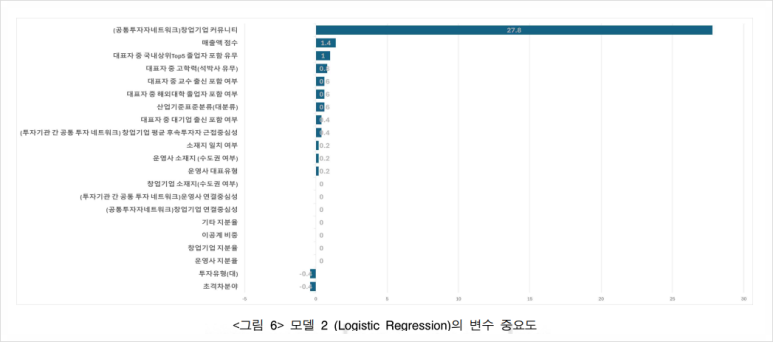
Notably, community and investor closeness centrality emerged as key predictors(Feature Importance) of funding success.
These findings demonstrate the power of structural relationships in determining startup outcomes—insights that cannot be captured by financial data alone.
<Feature Importance>

Traditional investment assessments often focus on financial metrics or founder profiles.
However, this study shows that a founder’s position in the startup network significantly influences their chances of securing future investment.
For investors, accelerators, and policymakers, this research highlights the value of data-driven, network-based investment decision-making.
netminer@cyram.com
References
[1] Sunwoo Kim, Youna Lee, Jungmin Seo and Kangmin Kim (2024). Machine Learning-Based Empirical Analysis of Determinants for Follow-on Investment in Startups. Asia-Pacific Journal of Business Venturing and Entrepreneurship, 19(6), 161 - 174.